Why Vritto
Your life is connected. Why aren't your apps?
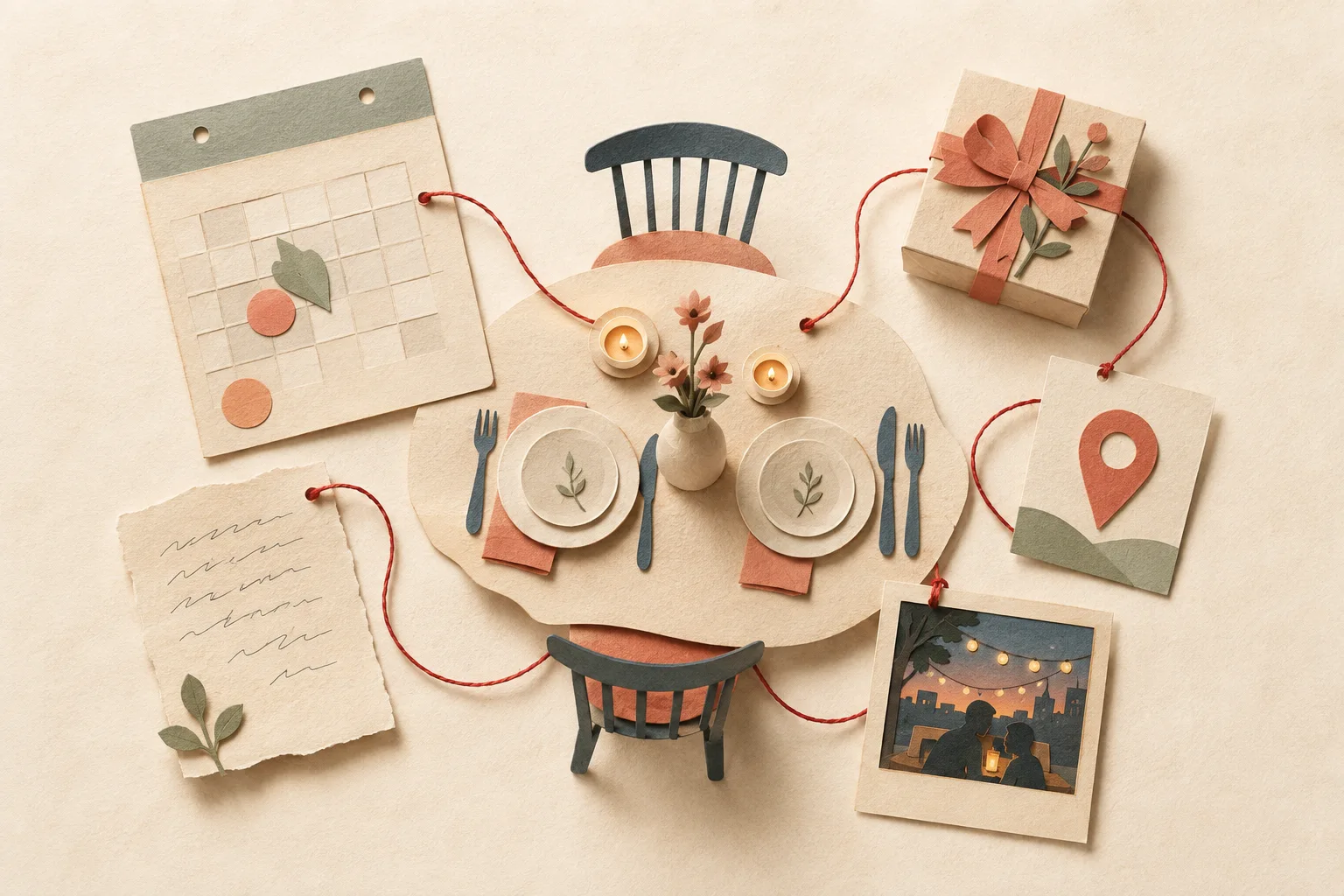
One dinner, five apps, and the work of keeping it all together. The idea behind Vritto, and why the connections in your life deserve a place of their own.
Founder of Vritto4 min read
In this article
It starts with something small. Dinner with a friend on Friday.
The reservation arrives in your email. You put the time in your calendar. Somewhere in a conversation, your friend mentioned a food allergy. Their birthday is coming up, so you add a gift to your task list. After dinner, you take a photo you want to keep.
One evening. Five places to remember it.
Each app has done its job. Yet you still have a job of your own: keeping the connections between them in your head.
That is the problem behind Vritto.
The work between the apps
We have become very good at saving information. A confirmation, an idea, a receipt, a name. There is a place for almost anything.
But finding a place for a detail is only the beginning. You also need to remember why it matters, what it belongs to, and when to come back to it. A task called “buy a gift” carries more meaning when it sits beside the person, the occasion, and the evening you are planning.
Without those connections, you become the person who holds everything together. You search a conversation, check the calendar, open a note, and reconstruct the same picture again. The information is there. The context takes work.
I am building Vritto around a simple idea: the relationships between the things in your life deserve a place in your software too.
One evening, with the context attached
Think about that Friday dinner again. This time, imagine opening the plan and finding the relevant pieces together.
The person you are meeting. The restaurant you chose. The reservation details. The gift you still need to pick up. A preference you saved because you wanted to be thoughtful.
You can follow the connection that matters in the moment. Before dinner, that might be the address or an unfinished errand. A month later, it might be the name of the place you both liked.
This is the experience Vritto is being built to support. Tasks, calendar events, people, places, notes, and other records have their own homes, with connections that preserve the bigger picture.
The dinner is a useful example because it is ordinary. The same need appears in a trip with bookings and a budget, a project with decisions and deadlines, or a routine connected to a personal goal. Life keeps creating these relationships. A personal organizer should help you keep them.
The relationships between the things in your life deserve a place in your software too.
A place for each part of your life
Different information needs different kinds of care. A calendar event needs a time. A receipt needs an amount. A person deserves more than a checkbox.
Vritto gives these subjects their own structure. You can work on a task as a task, then follow its connection to the project or person that explains it. The aim is to make each part useful on its own and easier to understand in context.
That also means you can start small. Begin with the plans you keep forgetting, the people you want to stay in touch with, or the notes you want to find again. Add another area when it becomes useful to you.
Organizing your life should feel manageable from the first step. The value should grow as you use it, without requiring you to document everything before anything helps.
Intelligence should begin with permission
Connected information can make an assistant more useful. With the context you choose to share, it can help you understand what needs attention or prepare for the day ahead.
That usefulness brings a responsibility. A personal organizer may contain information about your relationships, health, money, and private thoughts. Putting those details in one place makes clear boundaries essential.
In Vritto, AI is optional. You can organize your records without using an assistant. If you choose SahAI, Vritto's built-in assistant, or connect a compatible external assistant, access is controlled by permissions for each assistant and area of your life.
The principle is straightforward: you should be able to understand what an assistant can access and decide whether a proposed change belongs in your record. Choosing help with your calendar should leave you in control of access to everything else.
You can explore that approach on the Intelligence page, including an interactive example of the permission controls.
Remembering is part of living
A dinner eventually comes off your calendar. That does not mean it has stopped mattering.
The photo, the restaurant, and the small detail you want to remember become part of your history with someone. They can help you plan the next evening together, or simply bring back a good one.
I want Vritto to make room for that side of life as well as the practical work of getting through a day. Plans become experiences. Experiences become memories. The people and places remain connected across them.
Vritto is still preparing for launch. This first post is a statement of the purpose guiding that work: to give the important parts of a life a connected, private place, and to make that place useful on your terms.
Your life already has these connections. Your tools should help you keep them.
See the idea in practice
One ordinary day. A more connected picture.
Follow Samira from her morning plans to an evening worth remembering in an illustrative walkthrough of Vritto.
A Day in Vritto